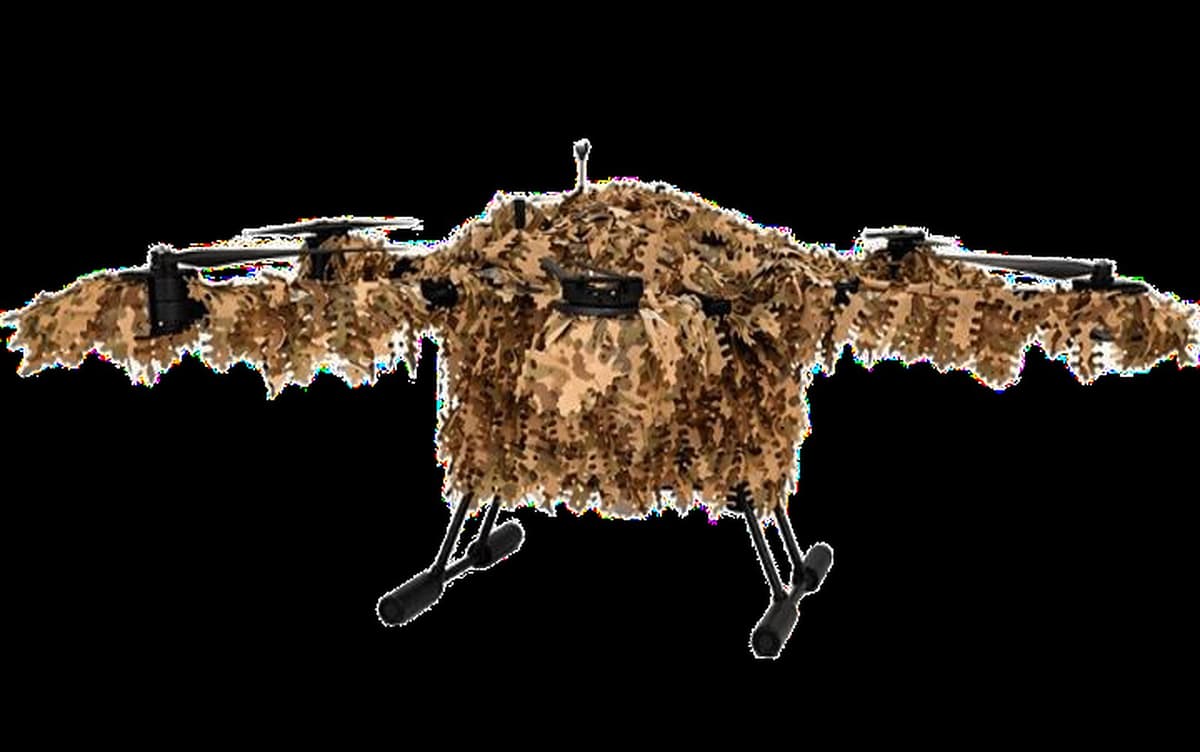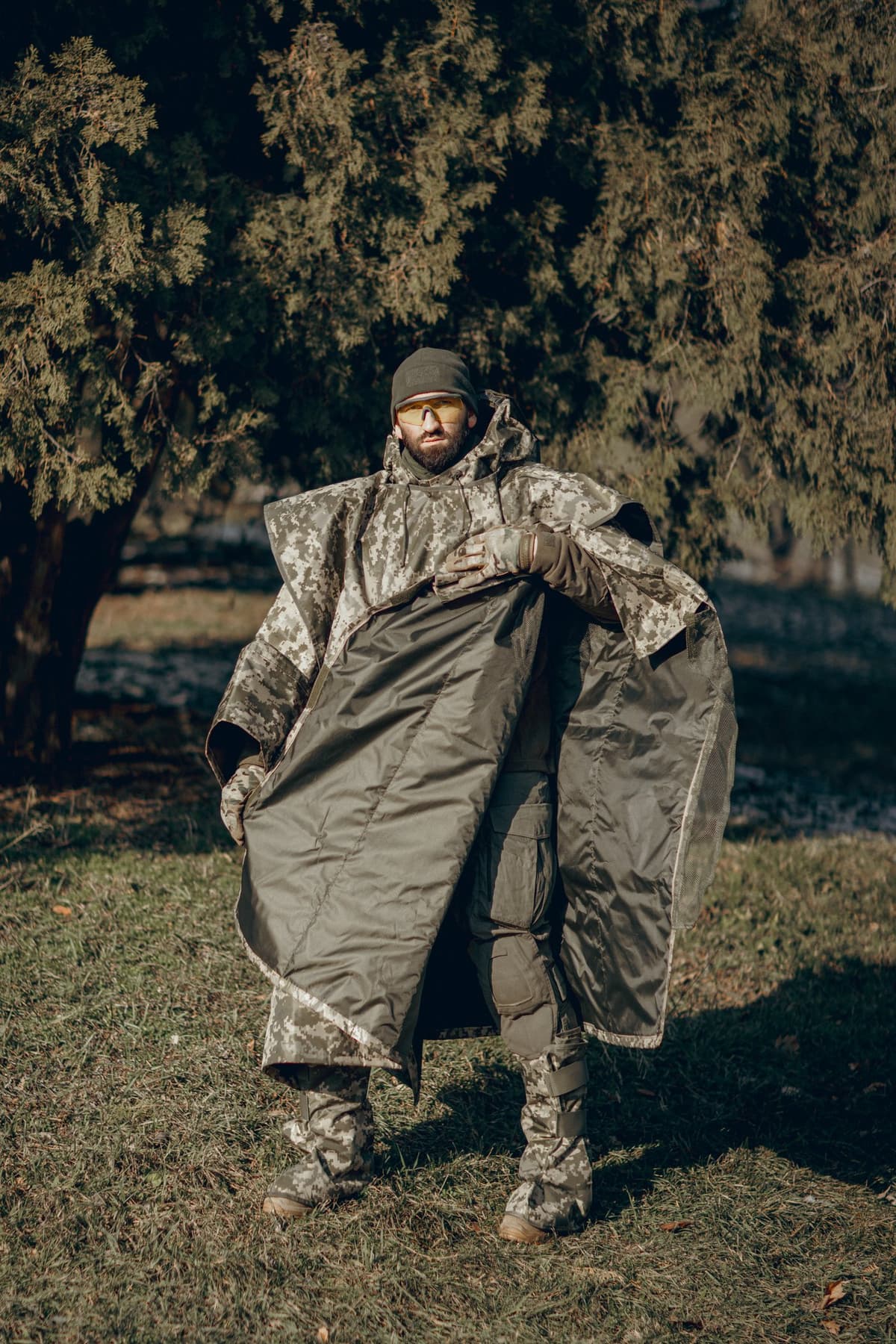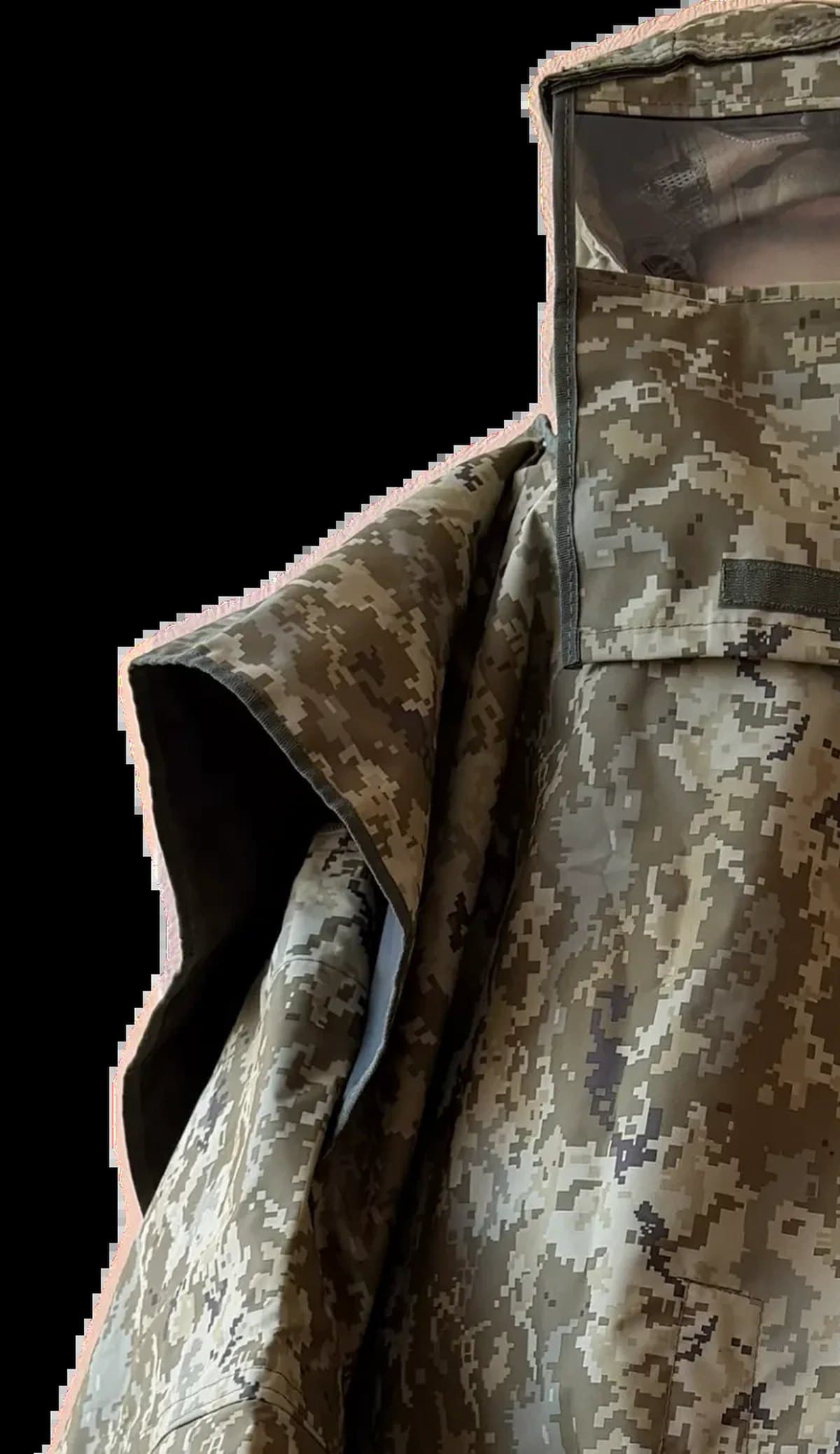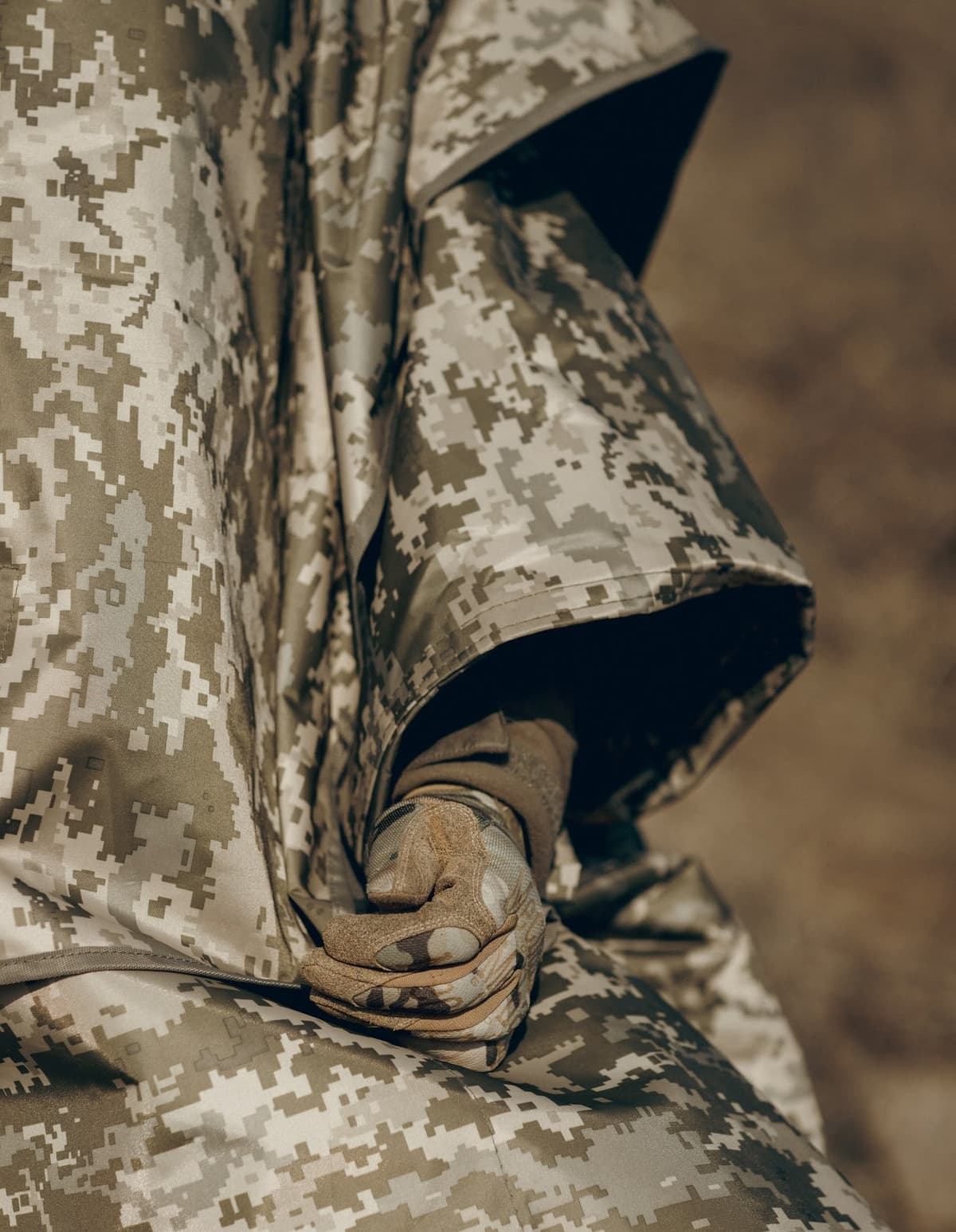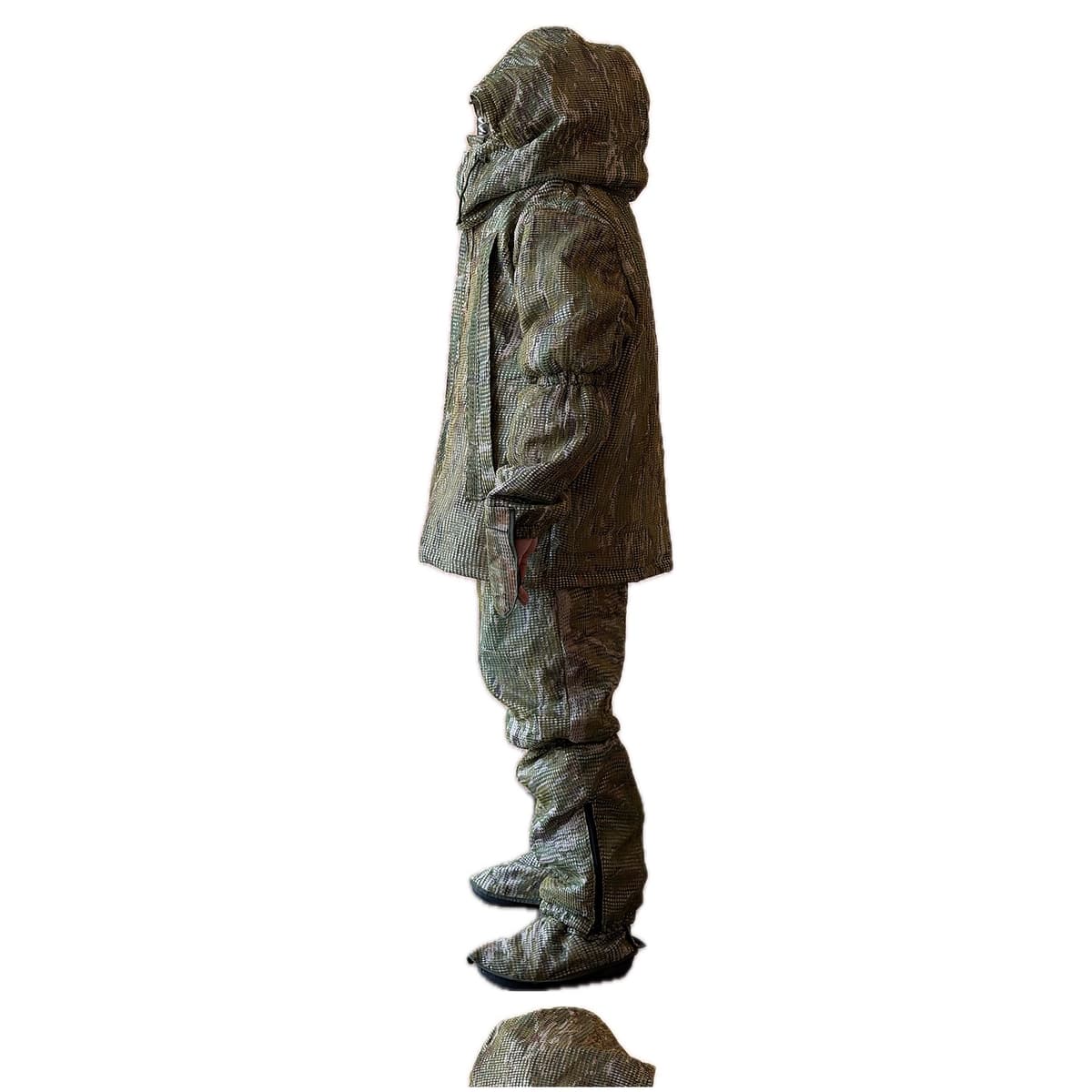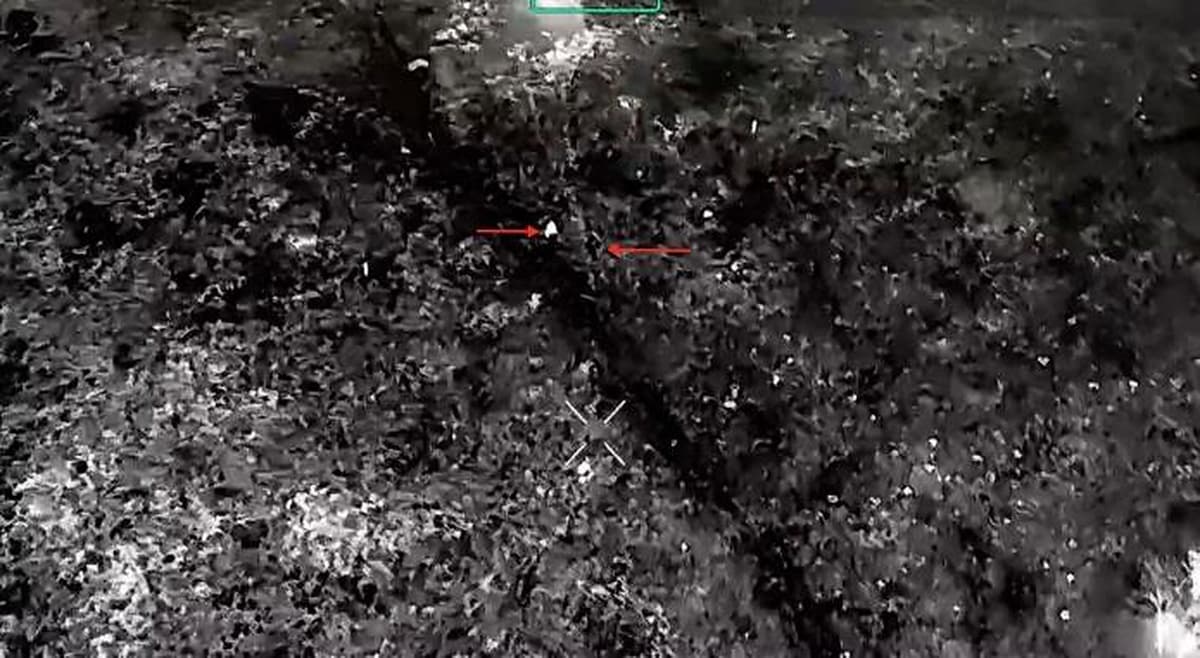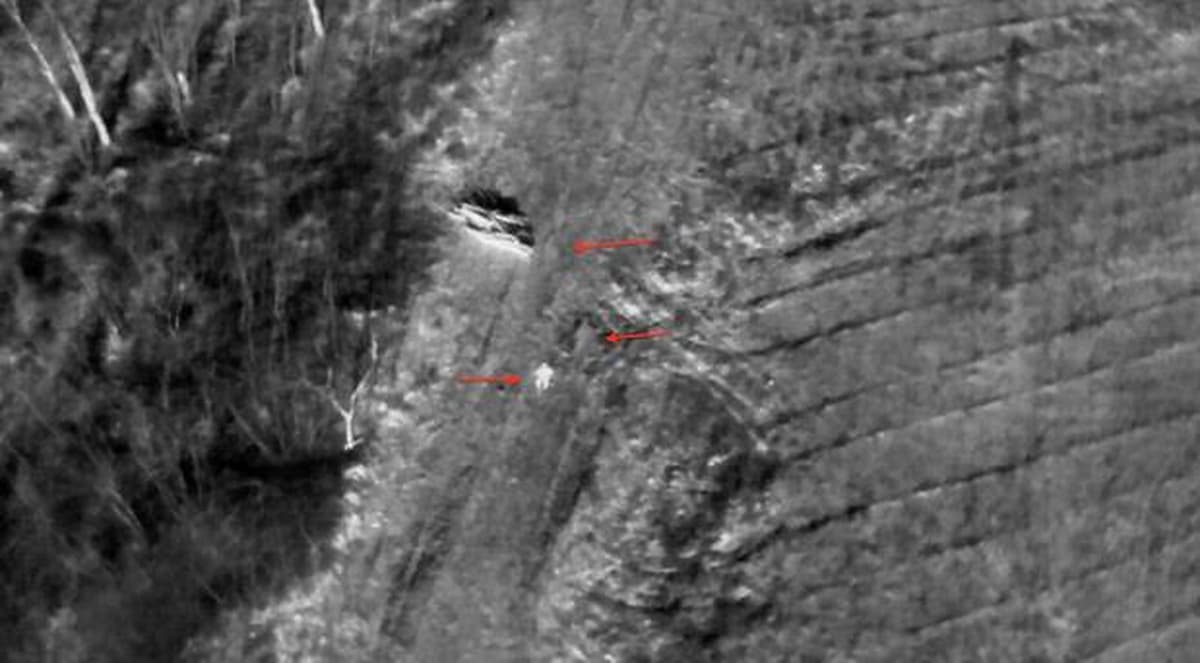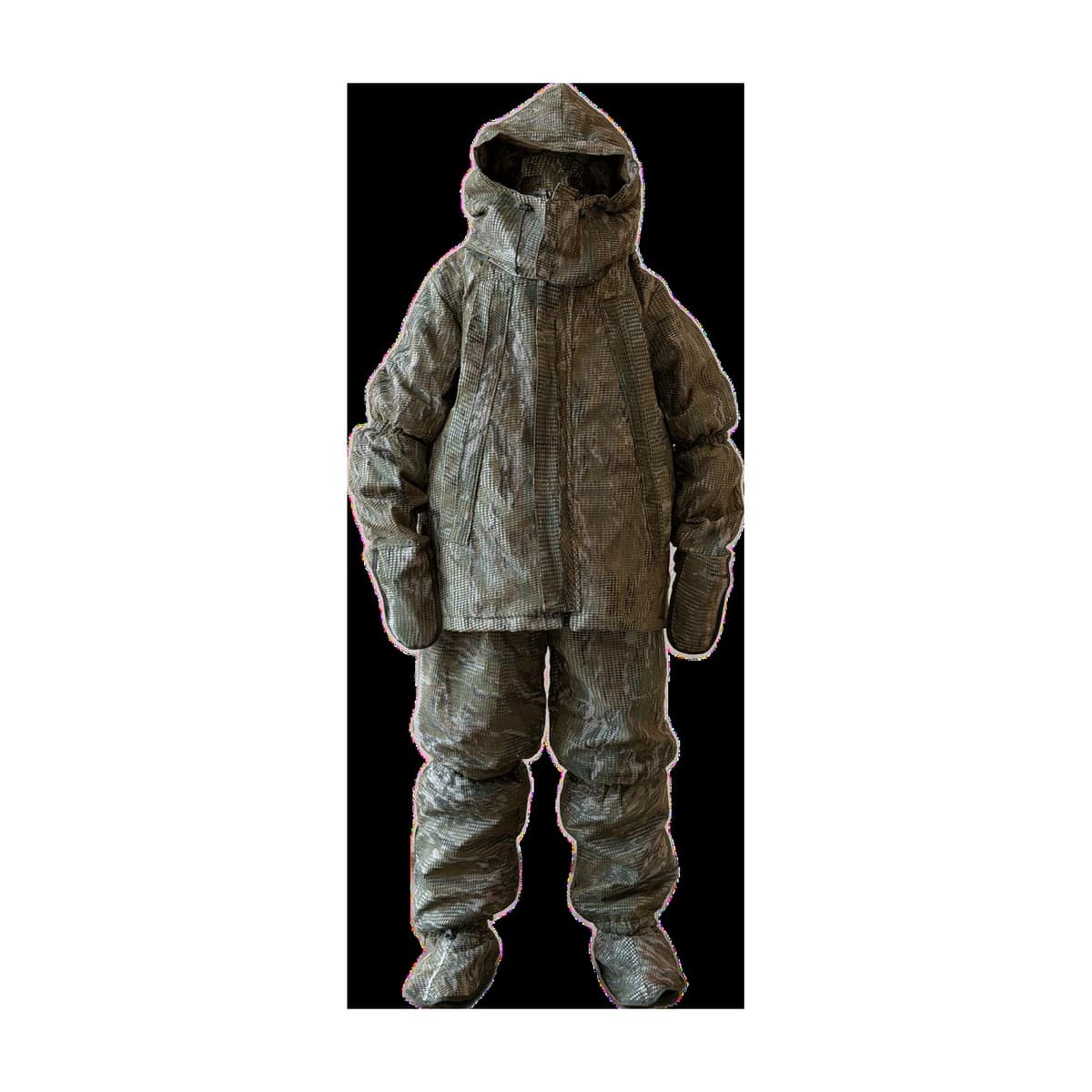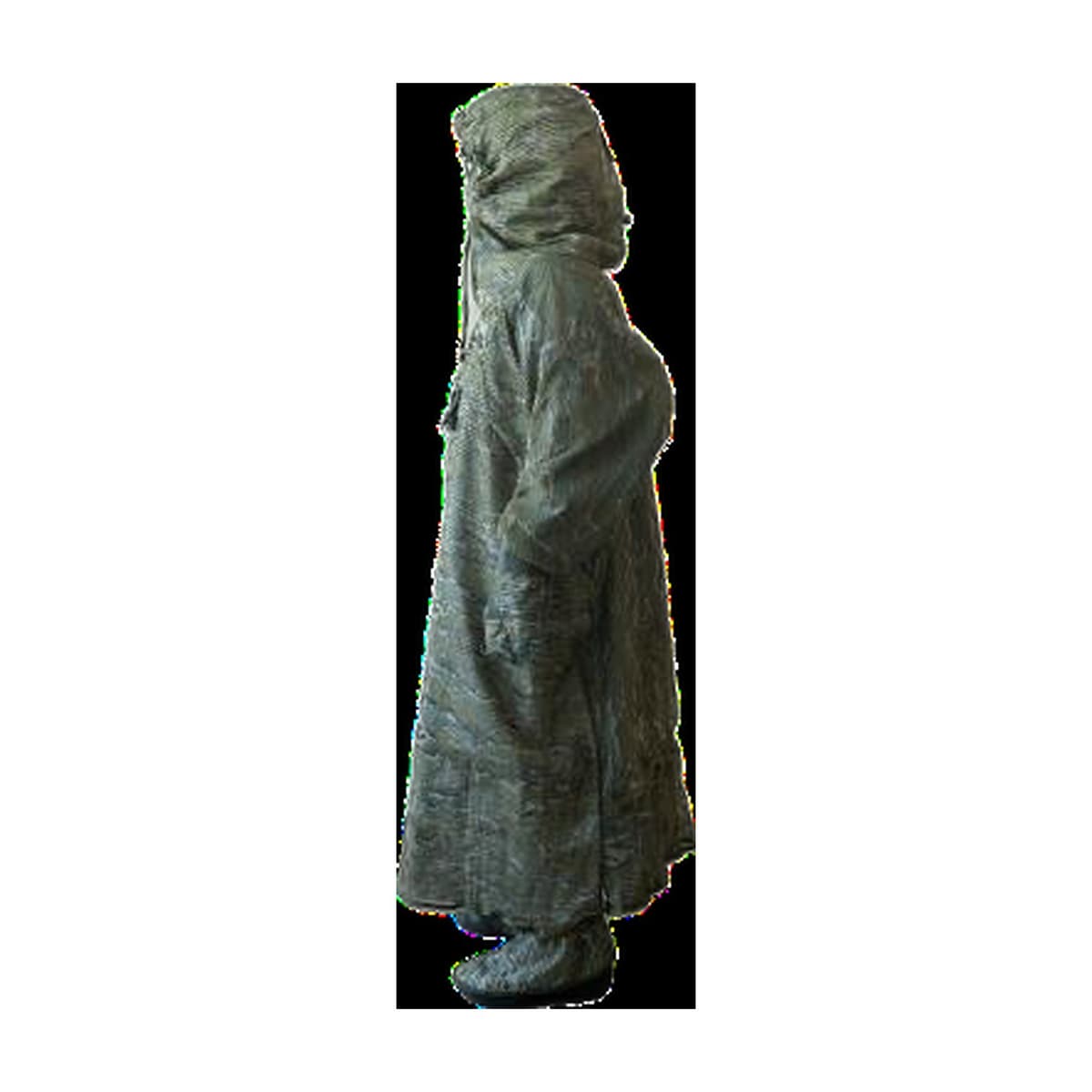
Thermal camouflage has to do two jobs with one kit: look like the ground in visible light, and stop the wearer reading as a bright human shape on a thermal camera. FlySpark builds passive multi-spectral concealment for dismounted troops, observation posts and grounded UAVs. The FlySpark Camo Poncho is the fast, lightweight layer for patrols and hasty positions. The FlySpark Camo Mesh Suit is a full jacket-and-trousers set for longer static tasks, and the FlySpark Heat-Shielding Cloak is a wider cut for equipment, weapon positions and two-person hides. For woodland and scrub, the FlySpark Camo LEAF 3D Suit adds a three-dimensional leaf silhouette, and the FlySpark UAV Concealment Cover hides airframes and batteries from overhead sensors. All of them work the same way: a low-emissivity anti-infrared layer under a visual pattern.
Mobility is where most concealment kits fail. A layer that looks convincing on a standing mannequin can open gaps at the cuffs, collar and waist the moment the wearer walks, kneels or crawls, and a moving heat source is far easier to pick out than a still one. Match the cut to the task: a poncho for patrols and short halts, a mesh suit when the wearer will be in position for hours, a cloak when equipment or a crew-served position must be covered. Plan the whole silhouette as well — hands, face, neck, boots, helmet and weapon are the usual leaks, so gloves, a face veil and a weapon wrap matter as much as the torso. Move behind terrain, avoid skylining, and stop before observing.
Results depend on conditions far more than on the fabric alone. A thermal sensor sees temperature difference: when the ground, foliage and a worn suit settle to the same temperature — most often around dawn and dusk, or under heavy overcast — contrast falls and concealment is strongest. On sun-baked ground, cold nights or against snow, the same kit shows much more. Wet fabric, sweat-soaked layers and long wear all change the picture, because a suit that traps body heat needs time to reach equilibrium and needs ventilation to avoid a hot patch at the back and shoulders. Sensor band, lens and pixel pitch also matter: a long-range LWIR (8–14 µm) camera reads differently from a short-range handheld unit at close range.
Compare kits on completeness before price. Check what is actually in the set — jacket, trousers, hood, mittens or gloves, overboots, stuff sack — and whether the anti-infrared layer is a separate inner layer or bonded to the shell, since a separate layer is easier to inspect and replace. Weigh the packed set and measure its volume against the rucksack space you have. Confirm the pattern and colour options match your theatre, that sizes cover your unit, and that seams, ripstop and closures survive crawling. Ask about spare mittens, overboots, repair patches and a second stuff sack, because those wear out first. Above all, remember this is passive concealment: it reduces a signature, it does not erase one, and it does nothing against radar.