
Guardian-X close-range interceptor drone — a drone interceptor for sale to authorized C-UAS buyers from ₹8,98,000. WhatsApp for interceptor drone price. Portable detect-track-intercept kits are quoted on the HD-2 page; this product is the kinetic interceptor only. Compare the high-speed FPV interceptor for longer chase envelopes.
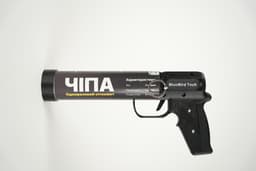
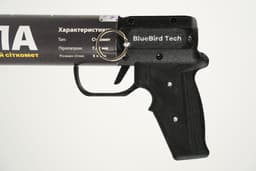
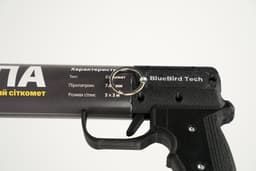
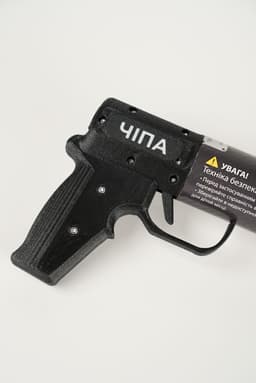
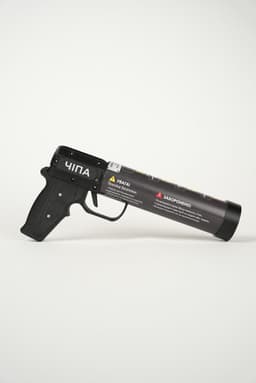
FlySpark CHIPA is a close-range anti-drone net launcher for FPV and light UAV interception with 3×3m net, up to 25m range and rapid deployment.
Defense & export systems — get a formal quote with lead time and end-user documentation on WhatsApp.
QtyMilitary-grade quality assured
Export-compliant documentation
24/7 engineering support
Talk to sales
Mon – Sun · 19:30 – 03:30 IST · [email protected]
Key facts
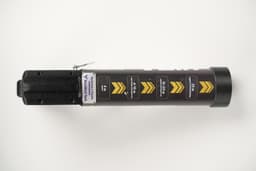
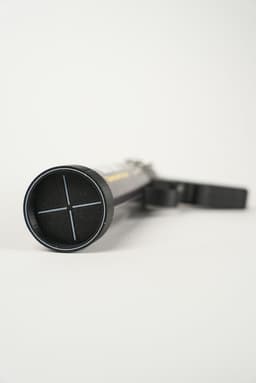
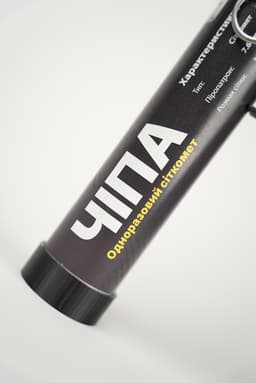
The FlySpark CHIPA is a hand-held, single-use net launcher that physically stops FPV and lightweight drones at close range by entangling their propellers with a 3 × 3 m net. It is meant as a last-layer tool for trained security and defence operators, especially where RF jamming is restricted. It weighs about 705 g, measures 50 × 260 mm, and reaches up to 25 m with about 0.2 s net deployment.
| Countermeasure method | Mechanical propeller entanglement by net (no RF emission) |
|---|---|
| Deployed net size | 3 m × 3 m |
| Effective range | Up to 25 m under suitable conditions |
| Net deployment time | Approximately 0.2 s |
| Launch mechanism | Pyrotechnic blank cartridge |
| Weight | Approximately 705 g |
| Dimensions | 50 mm diameter × 260 mm length |
| Design | Single-use |
| Storage life reference | 1 year |
| Targets | FPV drones, small drones and lightweight UAVs |
| Package | Launch unit, net charge container, blank cartridge component, user manual |
| Price (standard unit) | ₹1,10,000 |
Sources: FlySpark catalog data; FlySpark product page. Updated .
Intelligence Brief
FlySpark CHIPA Close-Range Anti-Drone Net Launcher | Portable FPV Drone Interception System
The FlySpark CHIPA Close-Range Anti-Drone Net Launcher is a compact, portable counter-UAV device designed for rapid physical interception of FPV drones and lightweight UAVs at short range. It uses a fast-deploying net to mechanically entangle drone propellers, causing the drone to lose lift and stop functioning as an airborne threat. Unlike RF jammers or GPS spoofing systems, CHIPA is a physical interception tool that does not rely on radio-frequency suppression, GNSS interference, signal takeover or electronic attack.
CHIPA is designed for last-layer drone defense when an FPV drone or lightweight UAV is already near a protected position, security team, mobile unit, restricted area, facility entrance, checkpoint or defensive perimeter. The system is lightweight at approximately 705g, has compact dimensions of 50mm diameter × 260mm length, deploys a 3×3m net, and is intended for close-range interception up to 25m under suitable conditions. Net deployment occurs rapidly, with a listed deployment time of approximately 0.2 seconds.
This product is especially useful as a backup layer in a complete counter-drone system. Drone detectors, radar, RF sensors, optical systems and EW equipment may provide early warning, while CHIPA provides a close-range physical response option when a drone enters the immediate protection zone. It is suitable for authorized defense units, facility security teams, mobile response teams, prison-security teams, VIP-event security, border observation groups and critical infrastructure protection teams.
Why It Matters: FPV drones are fast, compact and difficult to stop at close range. Electronic warfare systems may not always be available, legally permitted, properly positioned or effective against every threat. A compact net launcher gives trained operators a physical interception option for the final protection zone, especially where the goal is to stop a drone without emitting RF energy or interfering with nearby communication/navigation systems.
IMPORTANT USE NOTE: FlySpark CHIPA is a restricted close-range anti-drone physical interception device. It is intended only for authorized defense, government, security, institutional, industrial, emergency-response or approved professional use. It must be handled only by trained personnel according to supplied safety documentation and local law. It should not be used for unlawful harm, public misuse, unsafe firing, harassment, civilian crowd misuse or unauthorized drone interference. Check local laws, site permission, safety distance, storage rules, transport rules and operator approval before procurement or deployment.
Mission configurations
Select your operational configuration. Pricing may vary — request a formal quote for deployment quantities.
Standard FlySpark CHIPA unit for trained operators who need a compact physical anti-drone response tool for the final protection zone. Includes launch unit, net charge container, pyrotechnic blank cartridge component and user manual. SKU: FSP-CHIPA-NET-LAUNCHER-STD | Unit Price (excl. GST)₹1,10,00010 units | ||
Multiple CHIPA units, storage guidance, operator safety checklist and deployment planning support for facility, prison, industrial, event and mobile response teams. SKU: FSP-CHIPA-SECURITY-PACK | Unit Price (excl. GST)₹1,10,000Available | ||
Bulk unit supply, field storage layout, operator familiarization, deployment SOP support and integration with detection workflow for defense posts, border outposts and training ranges. SKU: FSP-CHIPA-DEFENSE-PACK | Unit Price (excl. GST)₹1,10,000Available | ||
Multiple net launcher units with perimeter deployment guidance, guard-post allocation and incident-response checklist for correctional facilities. SKU: FSP-CHIPA-PRISON-PACK | Unit Price (excl. GST)₹1,10,000Available | ||
Standard units with deployment planning for power plants, refineries, substations, oil/gas facilities, data centers and restricted industrial areas. SKU: FSP-CHIPA-INFRA-PACK | Unit Price (excl. GST)₹1,10,000Available | ||
Operator orientation, handling safety explanation, storage checklist, lawful-use guidance and integration into site SOP. SKU: FSP-CHIPA-TRAINING | Unit Price (excl. GST)₹1,10,000Available | ||
CHIPA units combined with FlySpark passive drone detector / RF monitoring / visual confirmation workflow planning for layered anti-drone protection. SKU: FSP-CHIPA-DETECTION-INTEGRATION | Unit Price (excl. GST)₹1,10,000Available |
Active configuration
Standard FlySpark CHIPA unit for trained operators who need a compact physical anti-drone response tool for the final protection zone. Includes launch unit, net charge container, pyrotechnic blank cartridge component and user manual.
₹1,10,000
Excl. GST
SKU: FSP-CHIPA-NET-LAUNCHER-STD
Configuration matrix
Side-by-side specifications — click a column to select
| Parameter | |||||||
|---|---|---|---|---|---|---|---|
| Unit Price (excl. GST) | ₹1,10,000 | ₹1,10,000 | ₹1,10,000 | ₹1,10,000 | ₹1,10,000 | ₹1,10,000 | ₹1,10,000 |
| Stock | 10 units | Available | Available | Available | Available | Available | Available |
| SKU | FSP-CHIPA-NET-LAUNCHER-STD | FSP-CHIPA-SECURITY-PACK | FSP-CHIPA-DEFENSE-PACK | FSP-CHIPA-PRISON-PACK | FSP-CHIPA-INFRA-PACK | FSP-CHIPA-TRAINING | FSP-CHIPA-DETECTION-INTEGRATION |
Technical Data Sheet
88 parameters across 12 categories
Complete specification index
Global export · local pricing
FlySpark exports this system worldwide with end-user certification, dual-use classification, and destination-specific compliance. Open your country edition for indicative local pricing; the binding quote is issued on WhatsApp in your currency.
All export marketschevron_right| Market | Indicative price | Quote |
|---|---|---|
| United States | US$1,200 | Quote for United States → |
| United Kingdom | £901 | Quote for United Kingdom → |
| Germany | 1.075 € | Quote for Germany → |
| France | 1 075 € | Quote for France → |
| Ukraine | 54 550 ₴ | Quote for Ukraine → |
| Saudi Arabia | SAR 4,510 | Quote for Saudi Arabia → |
| United Arab Emirates | AED 4,415 | |
| Australia | A$1,710 | |
| Israel | ₪3,745 | |
| Japan | ¥189,000 | |
| Singapore | S$1,540 | |
| Brazil | R$ 6.075 | |
| South Africa | R 20 000 | |
| Canada | CA$1,690 | |
| Turkey | ₺59.950 | |
| Poland | 4730 zł |
Same category
Related systems