No single sensor detects every drone in every condition. Serious counter-UAS programs layer complementary detection modalities, but budgets are finite — so the real question is which sensor to deploy first and what each one actually buys you. This guide compares the four practical drone-detection methods on the terms that matter operationally.
1. Passive RF detection
RF sensors listen for the control and video links between a drone and its operator, then classify the signal and often locate both aircraft and pilot.
- Strengths — no transmission (no spectrum authorization needed), long standoff range, works beyond line of sight, frequently pinpoints the operator, and low false-alarm rates against birds and clutter. Low power and cost per node.
- Limits — cannot see fully autonomous drones flying a pre-programmed GPS route with the radio silent, or fiber-optic-tethered drones. Signal-library coverage must keep pace with new protocols.
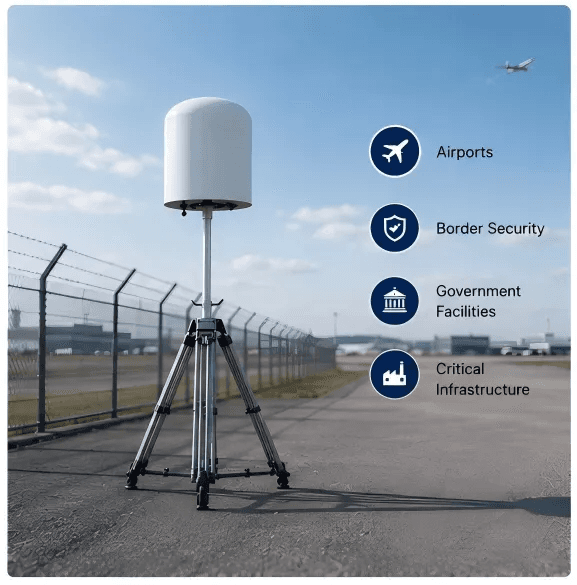
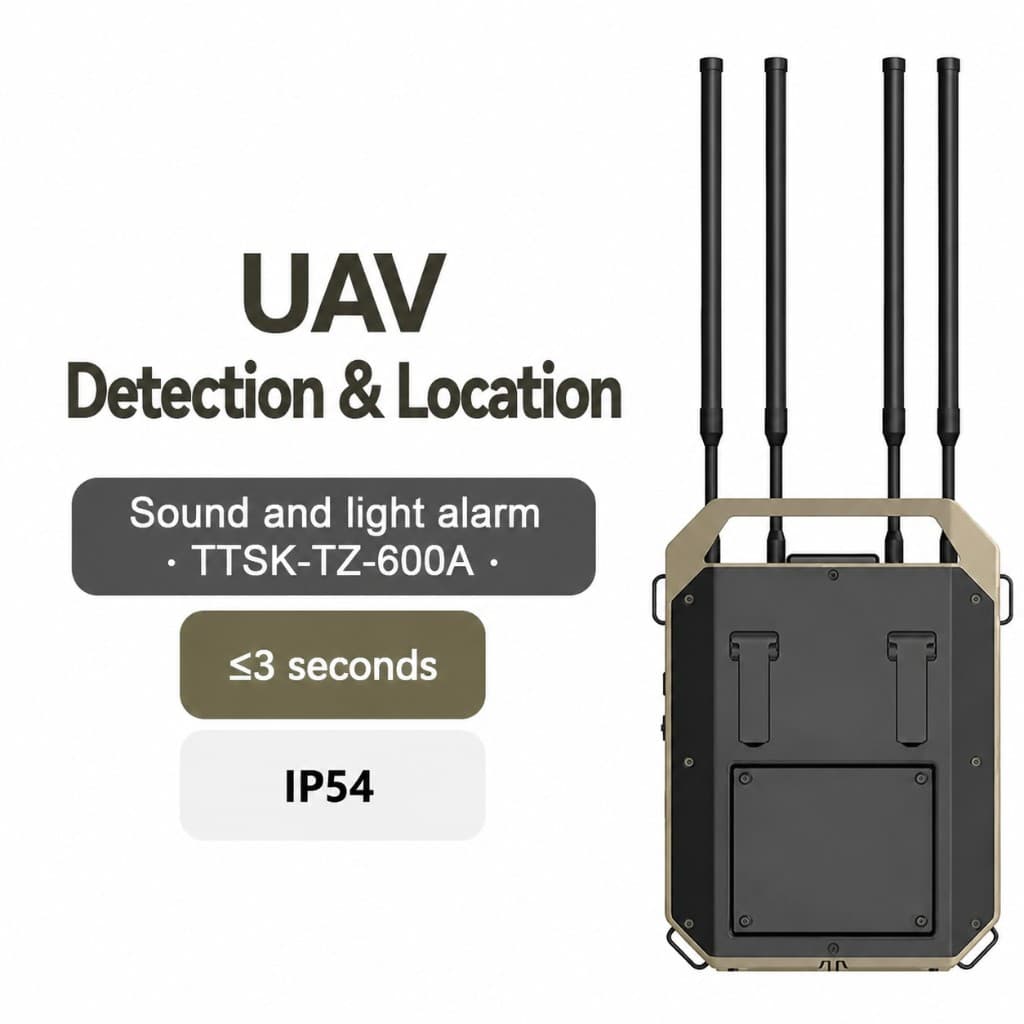
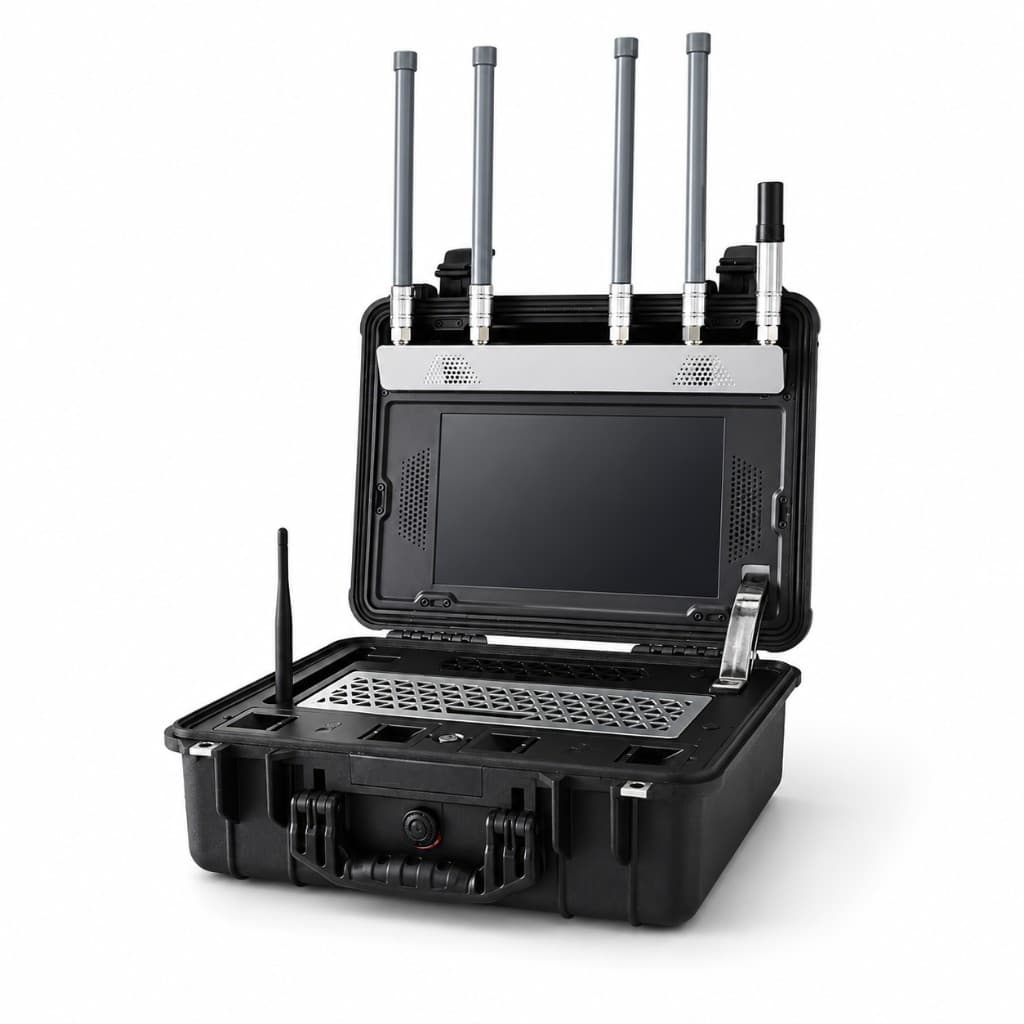
- Best for — the default first layer almost everywhere: airports, borders, CNI, and event security. A portable drone detector covers mobile teams and a fixed 70 MHz–6 GHz system covers perimeters.
2. Radar
Radar detects the physical aircraft by reflecting RF energy off it, so it sees drones regardless of whether they transmit.
- Strengths — detects RF-silent and autonomous drones, provides precise range and track, works day or night and through weather.
- Limits — it is an active emitter (regulatory and detectability considerations), small drones have a tiny radar cross-section that is easily confused with birds without good micro-Doppler classification, and system and integration cost is high. Terrain and clutter limit low-altitude coverage.
- Best for — high-value fixed sites that must catch autonomous threats and can fund a fusion architecture.
3. EO/IR (optical and infrared cameras)
Electro-optical and infrared cameras give a human-verifiable visual on the target.
- Strengths — positive visual identification, payload assessment, and evidence capture; infrared works at night.
- Limits — narrow field of view means EO/IR is a slew-to-cue confirmation sensor, not a wide-area search sensor; performance drops in fog, rain, and glare, and effective range is modest.
- Best for — cueing and identification once another sensor has provided a bearing.
4. Acoustic
Acoustic arrays recognize the sound signature of drone propellers and motors.
- Strengths — fully passive, low cost, and effective at short range against RF-silent drones; simple to deploy.
- Limits — short detection range and degraded performance in noisy urban or industrial environments and wind.
- Best for — short-range gap-filling and quiet sites, as a cheap complement rather than a primary layer.
How the layers combine
A mature system fuses sensors: RF for wide-area early warning and operator location, radar for RF-silent detection at high-value sites, EO/IR to slew-to-cue and identify, and acoustic to fill short-range gaps. Fusion cuts false alarms because a track confirmed by two independent modalities is far more trustworthy than any single sensor.
Where to start
For the overwhelming majority of buyers, passive RF is the right first investment: it needs no spectrum authorization, delivers the longest standoff, uniquely locates the operator, and is affordable to distribute across a perimeter. Add radar and EO/IR where the threat model includes autonomous, radio-silent drones and the budget supports fusion. The portable detector field guide covers deployment technique, and the Counter-UAS buyers guide places detection inside the full detect-track-mitigate model.